Sambhaji Nagar
Begin Your Recovery Journey
Taking the first step towards treatment can feel difficult, but seeking help is a positive step towards change.
At MOKSH FOUNDATION DE-ADDICTION & REHABILITATION CENTRE, we encourage individuals and families to seek appropriate professional guidance, understand the available treatment options, and make informed decisions about recovery.
Contact Us: 8390140099
Website: www.mokshbharat.com
Location: Nashik, Maharashtra, India
Why Consider MOKSH FOUNDATION?
• More than 10 years of service in addiction rehabilitation.
• Thousands of patients treated to date.
• Residential rehabilitation services for men.
• Psychiatric assessment and treatment according to clinical needs.
• Clinical psychology counselling and behavioural support.
• Recovery principles based on the AA programme, where appropriate.
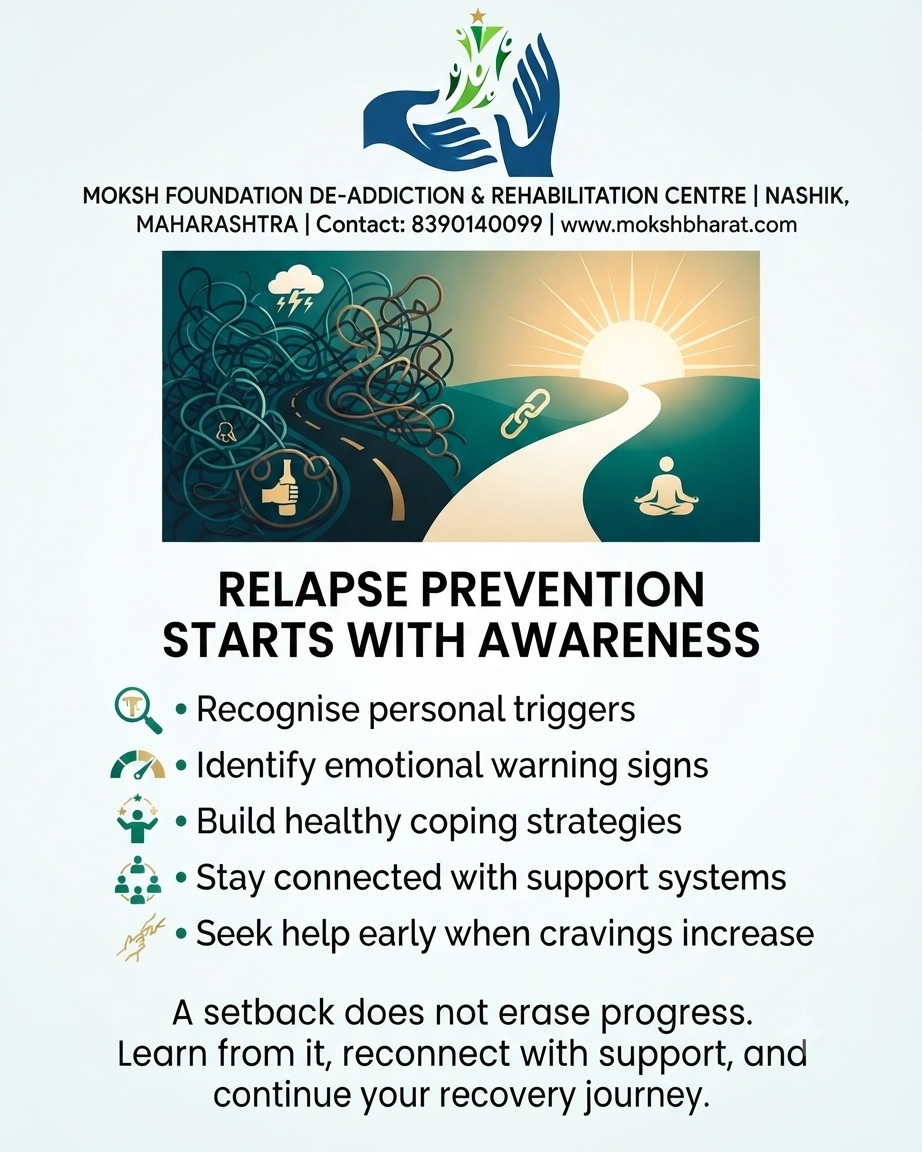
• Focus on relapse prevention and long-term recovery planning.
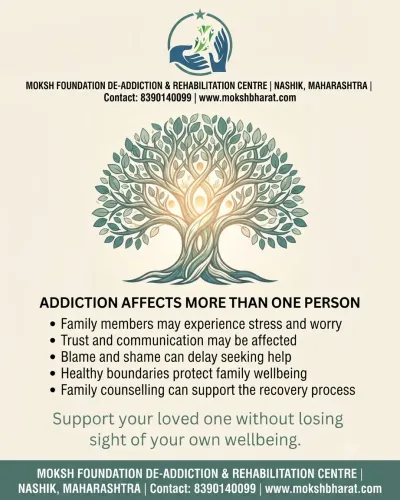
• Family guidance and support where suitable.
• An approach that considers psychological, emotional, behavioural, and social aspects of addiction.
We aim to provide a recovery-focused environment where individuals can work towards positive change with appropriate professional support.
Our Approach to Recovery
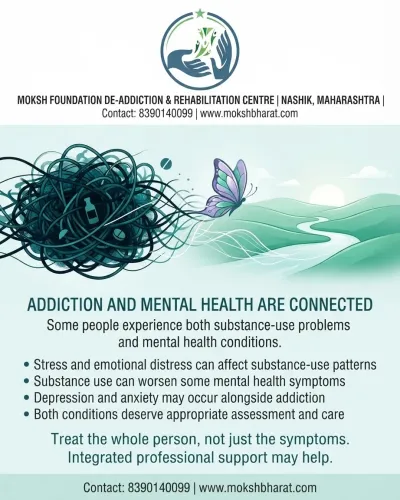
We understand addiction as a complex health condition that can affect behaviour, emotions, relationships, and daily functioning. Recovery requires more than willpower alone; it may involve medical treatment, psychological support, lifestyle changes, and continuing recovery guidance.
Our general approach includes:
1. Assessment: Understanding the individual's substance use history, mental health, physical health, and treatment needs.
2. Treatment planning: Developing an appropriate plan based on clinical assessment.
3. Stabilisation and medical care: Addressing withdrawal risks and other medical concerns with suitable professional supervision.
4. Psychological counselling: Working on triggers, emotional regulation, thought patterns, and behaviour.
5. Recovery education: Learning about addiction, acceptance, responsibility, and recovery principles.
6. Relapse prevention: Identifying warning signs and developing practical coping strategies.
7. Continuing recovery support: Planning for ongoing care, family involvement where appropriate, and life after residential rehabilitation.